

11 years ago
Showing posts with label current events. Show all posts
Showing posts with label current events. Show all posts
25 January 2012
The Artists Liberal
I'm involved in a new project collaborating with some of my fellow Butler graduates. We're writing a news blog. Find fiction and reporting and creative commentary all arising out of the liberal arts tradition. New(s) articulations. See us at http://theliberalartist.org/.
25 November 2009
Informed by Informing Information
Listen, I really don't get any joy when I come across indications that to be "American" is to be blatantly uninformed and reactionary, but I come across them all too often of late. No, I get it, all media has its slant and a line of people somewhere in the US is not, in and of itself, suggesting a plague of ignorance. But, there's something else at work here; that those people interviewed in the line who claimed they couldn't think of anything off hand (but might be able to research it) really wouldn't be able to create valid arguments because they simply don't have the resources.
Take, for instance, the new breast cancer screening regulations. And consider an example of the outrage that followed. Despite the fact that Sarah Palin's death panels were non-existence, this was seen by many as an act of rationing care; that the social/commun/lenin/mao/ists are corrupting America with big government legislation which is out to kill women to save money in order to provide healthcare to the illegals. Now, I spent about 20 minutes looking through not stories on the guidelines but the published report itself. I'm not doctor, and parts of it are hard to simply skim, but its not too difficult to see that the changes aren't earth-shattering, and (if you look at the previous reports) not unprecedented. Basically, this panel concluded, in tandem with the World Health Organization and other groups, that the risks of regular mammography in women in their 40s could not be overtly justified by the committee and should be left to the individuals and doctors.
The language is hardly absolute and inflammatory, yet the reaction is visceral. I see two reasons for this, first that breast cancer is a widespread, personal and highly emotional condition/issue for people who suffer and families that lose those people. A great deal of the reporting is clouded with testimonies of those who's lives were saved by a mammogram at age 40, or a mother who could have been saved had she been to regular screenings. Surely the human interest aspects of news are important, they make us care about issues that might otherwise seem foreign, but we cannot let emotional reaction prevent us from reading reports critically. I mean, if you read a news story that says doctors are suggesting that you do the opposite of what you know saved a friends life, wouldn't you attempt to figure out exactly what it was the doctors said? I tend to investigate those things that seem illogical to me.
Compounding this is the healthcare debate. The conservative zealots and politicians in the pockets of the insurance industry would do anything and everything to prevent passing any reform. Anything that even hints at some sort of change is painted as being forced upon us and destroying the America we love. Of course this has nothing to do with the actual science, the understanding of the science, or the value of human life but of campaign donations and political ideology. The result, I think, was a discourse fed by emotion and outrage in which people didn't have time to read the actual language; most were too busy writing witty and biting remarks to those that did not find the guidelines distasteful.
More recently, science was thrust into media debate again. Apparently, emails from an institution devoted to studying climate change were stolen. And, apparently these emails suggest that we are witness to the largest scientific conspiracy in the history of the age of enlightenment. ClimateGate. Scientists are corrupt, hiding data, spinning results and "tricking" the world into believe that humans are having an impact on global ecology. As to the details of what would drive scientists to do this, I am at a loss. I have not reviewed these thousands of emails myself yet, but the snippets I have read show some geeky scientist humor and discussion of problems facing climate scientists. Either this is just science being science, or this is evidence that the existence of global warming is still up for debate. Time to freak out.
To me this shows me what I already knew about science from reading Bruno Latour's Science in Action and studying an archaeological field school. Science is not pretty, its done by people who have their own motives and friends and enemies. Quote Gavin Schmitd in the NYT,
“Science doesn’t work because we’re all nice,” said Gavin A. Schmidt, a climatologist at NASA whose e-mail exchanges with colleagues over a variety of climate studies were in the cache. “Newton may have been an ass, but the theory of gravity still works.”
Now what he may have failed to mention is that Newtown's hypothetical jackassery likely made theoretical gravity what it is. There might be a lot of evidence to support climate change, but correlations alone do not a scientific movement make. We need to find the correlations and test them and believe them and tell others in order to make them true. I have said before that I think science is misunderstood by many who simply accept its authority. If you send a bunch of white men to college for a really long time and then they write long papers with big words, you're likely to believe what they have to say, especially because their really smart friends also believe them.
But science and medicine are human constructs and human practices. As such they are imperfect, and this goes beyond the whole test, retest and suggest tests for the future thing. The idea of pure fact, of the truth about climate change, is always going to be seen through a fallible, human lens. We cannot simply observe. We can only observe through our baggage, like the scientists who discuss, within their work-related emails, skeptics and journalists that complicate their lives.
Without going into a mini-version of my thesis, my point is that the coverage of events, and misunderstanding of what science is, lead to in this case, an inability for many to figure out what the hell was going on. If I might make make the elitist assumption that not all my fellow Americans are as unoccupied, investigative, cynical and academic as I am, I think I can safely say that John and Jane Doe, watching ABCs nightly news, would not go to such lengths as I have gone here to understand the debates. We find trusted sources, take them at their words, and are provided with convenient buzz words to utilize in discussions with our friends and family.
Unfortunately, that most of the country is simply fed info by their moving picture boxes is supported by the general sitgma of intellectuals, those rich elitists stuck in their books and out of touch with people. Though I experienced it in college, I find more and more in the "real" world that independent review and learning is scoffed at and ignored in the face of more palatable perspectives (those which incite the emotions). Thinking is generally unprofitable and a waste of money-making time and a lot of people won't make time for it. Thus, we find ourselves in a time when the Palin line counts as informed decision making.
06 November 2009
A Rant of One Who Would Destroy America
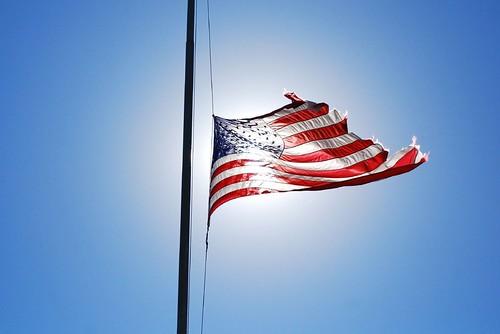
Listen,
No really, listen:
You know how Glenn Beck talks about liberal leftists destroying America. This is what one really sounds like. SPOILER ALERT: I am an elitist and cynical, lefty hippie.
I seems that maybe Obama charmed his way to the White House following in the steps of George W. Bush. The biggest difference? Obama was legitimately elected, and no one wanted to have a beer with him; they just hoped that he would bring some progressive action to the presidency.
Sure it's too early to judge him as a president but it's not looking good. Take something like healthcare, quality and affordable healthcare. It seems he would let his own party not only butcher the concept of a public option into some meaningless, impotent moderate compromise, but he would also watch members of his own party threaten to block the bill the even coming to a vote. If I believed in a god, I would invoke its name and beg it to make Obama take a stand. I've seen nothing but pandering and inaction. If one really wants to close a secret torture center, one simply needs to close it. Instead, Obama offers nothing but waiting. Same with waging war. He continues to support the killing of human beings and recognizes an illegitimate Afghan leader. If you hate murdering humans, then simply take a courageous step, walk away and face the shame and ridicule that we fucked up. No, really. Finally, Gay rights have taken significant blows recently and Mr. Obama, who looked to be a friend of the LGBTQ community, a president who felt the need to support democrats in local elections, said nothing of the referendums on gay marriage and civil union.
We are not on good terms, him and me. His administration has been consumed of late with a debate with the standing on cable media, laying wreaths and with pandering to the right, the very people who didn't vote for him and oppose anything with his name on it. Here's how it works. Leaders lead, which means making decisions and taking actions that will get you criticism from your foes and your sell-out party members. I believed that Obama believed in what he said he believed in. So far, it seems he's on a one way street to sell-out-ville. But I am just a disgruntled liberal.
So, what of freedom and democracy and capitalism. Lies. At least in this current country. Freedom and equality are routinely denied to some at the hands of pseudo-democracy and capitalism. Listen, capitalism ensures the success of the rich and necessitates the plight of the poor. And its no mistake that the rich are married (though philandering) white men and the poor single black women. The American Dream is a fantasy that addicts the lower classes to a definition of success that demands materialism; own more stuff, be hotter stuff. But, then the middle classes need to own more stuff to out-stuff the lower class. Finally, profit, for the rich anyway, who own all the stuffs that the stuff-wanters want. This is all inherent in a system that places import upon certain types of personal wealth. Add in a side of corporate corruption and you have an exploitative invisible hand that crushes the masses while the top one percent suckle at its teat. Hello cynicism!
Democracy would suggest that these masses might have some leverage. Nope. Politicians are in the pocket of the one percent, if they themselves aren't in the one percent. Obama, or Nancy Pelosi, or Olympia Snowe might have had meager, down-home beginnings but they've arisen to such a class and success that they have no personal stake in what the public wants. The public, the masses, support a public option. Yet, at the hands of insurance lobbyists, many politicians will press the congress to produce a bill that has exactly the opposite. But surely the masses could simply vote out these corrupt leaders. Except the masses mostly believe they have to choose between the lesser of two evils and not someone who represents their interests. Independent and progressive candidates are painted as left or right wing wackos who speak their minds, express exactly what they mean and make no concessions (for shame!). This has gone on for so long that the public does not take advantage of its right to elect leaders. For once, the decisions of the public matter, their apathy declares that contemporary politics and American democracy is dying.
And now I'd like to take a moment and criticize my favorite target: the media. That mostly electronic outlet that offers only lies, sensationalism and advertising under the guise of some perverted form of journalism. All the fair and balanced television media offer nothing of value except opinion, which the majority of people take as news. And yes, I am playing the elitism card, if that card is recognizing that those with independent, critical minds are portrayed as out of touch, ivory towerists. I'm not suggesting that I have a better perspective, but simply utilizing what my perspective gives me, an ability to recognize other perspectives.
Furthermore the media dupes us with stories of celebrity drama, "reality" shows, and a fetishism of death. Routinely, stories of import to the state of American life, stories that reveal the lies of politicians and stories that give indication to the worrisome and problematic state of the world are ignored for sensationalist reporting, empty accusations and "human interest" reporting which gives us a nice fluffy feeling in our hearts. In short, we are trained to ignore politics, realist perspectives and sad stories with bad endings and trained to consume and discuss sad stories with happy endings. The substance is left, then, to comedy shows which satirize the media and offer the only sane reaction to the state of things, laughter.
Also, people in the United States are routinely denied civil and human rights by a largely Christian, exclusionary paradigm. Gays cannot marry, gays are considered inherently sinful and shameful and somehow not normal, women are paid less, women are denied agency over their own bodies, immigrants are described as insidious invaders, Muslims are labeled as terrorists, blacks, by no coincidence, wind up most hampered by the capitalist system, state legislators routinely participate in state sanctioned murder, millions are denied rights to basic healthcare and I once got a parking ticket for parking in front of my own house. It's all fucked up.
And what is the solution? The collapse of capitalism followed by a humanist overthrow of the Christian, oppressive US government by the people. Realistically, I believe this would result in the dissolution of the United States and the establishment of new territories. Now, being the ardent and hopeless pacifist that I am and do not see violence as a necessary. I believe that the disenchantment of the people and a natural collapse of capitalism will throw these United States into such an identity crises that the current form of government and economic will be unable to stand. I believe it's happening now. Increasingly the wackos on all ends of the political spectrums are the only one's making sense. Even if their values conflict with my own, I find sanity in their ferocity to accomplish something in the face of the establishment.
Now I cannot predict the result. But I do believe that the America as we know it will fall and be remade. I believe that this will come down to a clash between secularism and religiosity. But, I hope, and here comes the utopia, that a state arises that promotes (in deliberate rejection of freedom and liberty and justice) tolerance and peace and humanism for all. This final thought, the naive utopia, is the only thing that gives me much hope these days as I become increasingly maddened and anxious and cynical at the hand of my overwhelming disillusionment.
16 December 2008
The National Sole
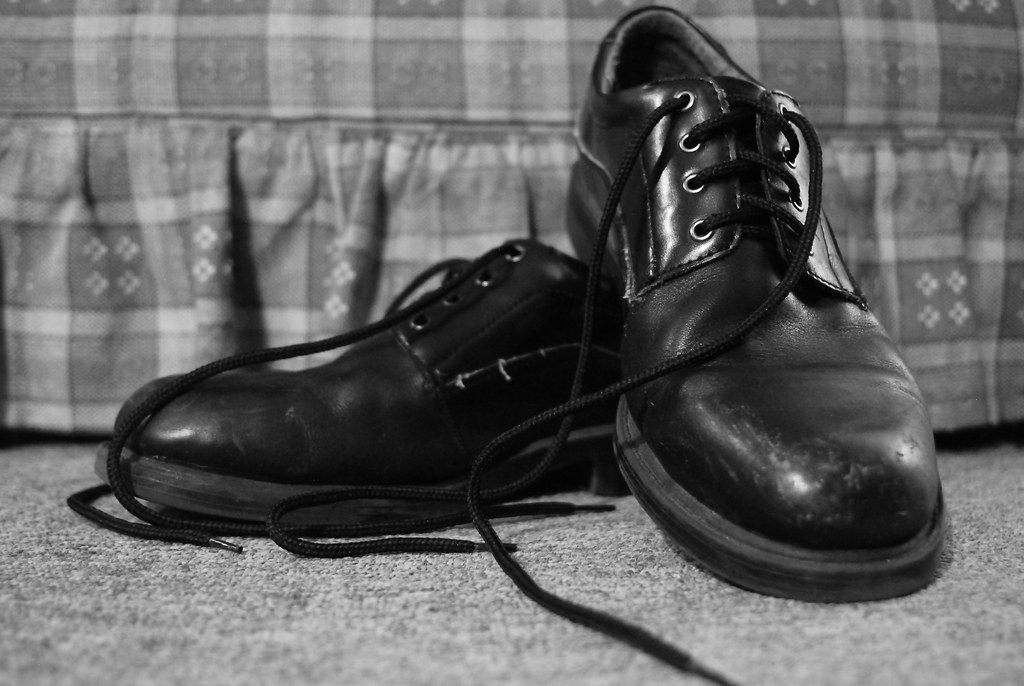
Even the attention-whores of the media caught on that this act was more than protest, but outright disrespect. It seems that the sole of the shoe especially is considered quite unclean and profane by some Muslims.
Still, its not every day that dignitaries like the US president have articles of clothing hurled in their direction. Or is it? I think the reaction today was more chuckles and less sock, I mean, shock. Apologies. I suppose I would expect no less at this point in history. It's fairly obvious these days that our president and the national image he represents are far from the reknowned reputations of yore.
Perhaps this discussion is moot, for a lame-duck can only expect a reputation as such. But, I think this is some baggage that the next administration will have to deal with. Obama will not start with a new slate, but rather some sort of corroding, eroded, malformed semblence of a slate. Obama is no Christ either, he cannot conjure up some heroic and instantaneous reconstruction.
It's going to take a while to leave the shoes of Bush behind and clear a new path.
27 May 2008
Perspective
I saw a particularly gruesome and vulgar episode of South Park that raised the bar on brilliant satire. The episode was about Britney Spears and was a commentary on celebrity obsession culture in the US media today. Britney is stalked throughout the episode and blows off the top 90% of her head. For the rest of the episode she is hustled around by a 4th grader (tongue loose) to escape te glare of the media. Nevertheless, not only does the media but an entre group of people finds Britney and shines the spotlight so bright that she collapses and dies. A conspiracy is revealed in the end in which US culture is compared to Mesoamerican cultures in which human sacrafice was done peridoically. It is said that we breed these helpless (hapless?) celebrities solely to destroy them in the end and maintain order.
What I find brilliant about thsi episode is not only the brillaint commentary about how obsessed with celebrity lives we are, but the comparison to human sacrafice. The creaters disregard any notion of political correctness and call out the hideous aspects of our culture in an explicit way.
This kind of look at our culture opens the door for a self-reflexive analysis that exposes our own culture as bare as it can get. It draws connections. Suddenly we see our own ways of life compared to something that we might consider both immoral and gruesome and savage.
This came to mind earlier this evening as I read a refreshing blog about the raid on the Fundamentalist Church of Latter Day Saints in Texas. Most are quick to make judgements about polygamy and "cults," but are these things we define as wacko notions really so different from our own? The idea of mongamy in the US is fairly debunked. Serial monagamy at best, we might say. The fact is we change partners often and often commit to several at a time (even while enveloped in this sacred institution that is "marriage"). Placing celebrities on a giant public pedistal (TV) and watching their fall is tantamount to human sacrafice. We regulalry mutilate our bodies by injecting poison into our face and chopping up are breasts to conform to culturally accepted norms of beauty. Yet we are disgusted by female circumcision. We are quick to judge Muslim religious states, yet refuse to see the strong and often violent influence of Christianity in our own political and national actions. Plenty of various states are criticized for human rights violations while we practice state-sanctioned murder (death penalty anyone?) on a daily basis.
Who is more savage?
What do we need for the future? Money, success, a democrat in the White House? No. Hope? Ha!
Perspective. We don't need to discard our ideals and practice my level of moral relativism, but we do need perspective. A perspective to understand context and continuity.
What I find brilliant about thsi episode is not only the brillaint commentary about how obsessed with celebrity lives we are, but the comparison to human sacrafice. The creaters disregard any notion of political correctness and call out the hideous aspects of our culture in an explicit way.
This kind of look at our culture opens the door for a self-reflexive analysis that exposes our own culture as bare as it can get. It draws connections. Suddenly we see our own ways of life compared to something that we might consider both immoral and gruesome and savage.
This came to mind earlier this evening as I read a refreshing blog about the raid on the Fundamentalist Church of Latter Day Saints in Texas. Most are quick to make judgements about polygamy and "cults," but are these things we define as wacko notions really so different from our own? The idea of mongamy in the US is fairly debunked. Serial monagamy at best, we might say. The fact is we change partners often and often commit to several at a time (even while enveloped in this sacred institution that is "marriage"). Placing celebrities on a giant public pedistal (TV) and watching their fall is tantamount to human sacrafice. We regulalry mutilate our bodies by injecting poison into our face and chopping up are breasts to conform to culturally accepted norms of beauty. Yet we are disgusted by female circumcision. We are quick to judge Muslim religious states, yet refuse to see the strong and often violent influence of Christianity in our own political and national actions. Plenty of various states are criticized for human rights violations while we practice state-sanctioned murder (death penalty anyone?) on a daily basis.
Who is more savage?
What do we need for the future? Money, success, a democrat in the White House? No. Hope? Ha!
Perspective. We don't need to discard our ideals and practice my level of moral relativism, but we do need perspective. A perspective to understand context and continuity.
11 April 2008
Acting Out
Hope and change has been the slogan of this political year. Unfortunately, politics has inspired little hope and has instead planted seeds of despondency that the United States is on a one way path to epic failure. All aboard the fail boat!
The immigration debate has inspired such despondency within me of late. It was highlighted by a small news story that slipped under the radar recently. Absolut Vodka ran an ad campaign in Mexico in which (in an attempt to celebrate Mexican heritage) it ran the slogan “In an Absolut World” over an image of 19th century North American, where all the territory west of the Rocky Mountains was Mexico. Outrage arose, not from within Mexico, but rather from several conservative groups and journalists in the United States that called for a boycott of the brand. Absolut apologized for its campaign and stopped running the ads; A politically correct, profit minded and truly “American” response.
This reaction is representative of the deteriorating status of Mexicans and US/Mexico relations in light of the immigration debate. All politicians are dealing with the influx of illegal immigrants into this country, but the kind of rhetoric and ideas that are being thrown around reveal a dehumanizing of Mexicans.
In this debate Mexicans and Hispanic immigrants coming from the south are referred to as problems and often as “illegals.” Some might argue that terminology is harmless, but I think otherwise. Referring to fellow human beings in such negative ways creates immediate prejudice and devaluing. As a result the identity we project on Hispanic immigrants is one centered on notions of rejection, objectification and immorality. We refer to them, not as people, but rather as amorphous entities that exist in the realm of illegality and encroachment.
The discourse of solution is not a positive one. Illegal immigration (and the millions are human beings associated with it) is referred to as a problem that needs to be rectified. Immigrants are objectified and treated as commodities as we decide their worth in our economy and culture, or as we decide which ones to ship back and how to do so. There is not talk of moving forward, only of creating stasis by cutting off the routes and purging our country of these dirty, illegal and problematic bodies that are corrupting true American values.
Stephen Colbert joked with Mike Huckabee about building a catapult along the border to fire illegals back into Mexico. The idea seems ridiculous, but his satire is not far off. It highlights the dehumanization of Hispanic immigrants. Not only are their identities essentialized to that of “Mexican” but they are considered inherently illegitimate. Whether we agree with it or not, the immigration debate has stolen the status of equality from Hispanic immigrants. We are living in a world where “freedom and justice for all” is a farce and instead, human status is determined by economic worth and genealogy.
To be Freudian for a moment, can we examine the illegal immigration debate, and responses like those to the Absolut ad, as an acting-out of some deep seated problem? I think we can. The crisis we are facing here is not one of population, jobs, culture or globalization. No, what we are facing is an identity crisis of a national sort.
We are facing many problems as a nation, namely our economy and our political reputation. As the European Union and China grow stronger our role as super-power is being contested. We are accused of anti-intellectualism. Culturally we are divided over gay marriage, abortion, religion and wealth. Every day I see hopeless efforts to establish and secure the idea of “America” and a greater number of individuals and ideas that contest such an identity at fundamental levels.
The role of the United States and our future is uncertain and possibly quite bleak. As a result we are acting out and building fences on our borders to keep out those seeking better lives. As we become ever so deeply involved in contentious conflict in the Middle East, we are troubled and take our frustration out on those illegals that indisputably have broken the law and assailed our “American” values.
This debate is not about immigrants, they will continue to come and there’s nothing we can do about it. If we were a healthy nation, we would have confidence that our economics and culture would adjust accordingly. What I see through examples like that of the Absolut campaign, is that these crises we face are more likely unhealthy and counterproductive projections of our own cultural and identity crises.
We are freefalling downward into a pit of cultural crisis and shutdown. We are so insecure with who we are a nation that we are threatened by the Spanish language. Eventually, we will end our descent and hit rock bottom. We will be confronted with tumultuous and violent conflict as we run out things to cover our problems. Shall we focus of catapulting illegals back to Mexico? Shall we continue to obsess ourselves with the lives of celebrities? Shall we fill the voids of our political lives with debates over tiny and insignificant questions and comment? Or, shall we being to look deeper and find those bugs and irks deep within our cultural being and face our problems and the world’s problems head on?
I have not yet completely resigned myself to the bleak outlook I have defined here. I still have confidence that what we need is simple change on our own parts. Instead of breeding dogma, we need to breed understanding. I hope that one day we will be known as the generation of understanding that rose to the great challenges we are facing now and moved forward.
01 April 2008
The Media, Inside Out
Well, it's been nearly a month since I last posted. I suppose my mind has been busy for more productive purposes.
Today, I shall focus on that brilliant entity that we all love, the media. The lovely Chelsea Clinton was at Butler University (my home) last week campaigning for her mother. Many are likely familiar with the incident that proceeded, the asking of the question about Monica Lewinsky. Likely because of a slow news day, this question and analysis of the question was everywhere.
I think that we students here have had an interesting opportunity to take a fine look at the media now. We have seen a simple little question blown into a huge national topic of discussion. We were also witness to all sorts of reaction to and reporting of this issue.
I think previous blogs here have shown my distrust and utter contempt for the media. Perhaps I'll reiterate anyway: far from informing us, I think the media does more to lull us into an ignorant acquiescence, where we are at the whims of emotion and sensationalism. And sensationalism, my friends, is exactly what we had here in the few days following the Chelsea question. I will not attempt to either refute or justify the question, it was asked and that's all we can really say about it. But suddenly the student who asked the question was being interviewed all over and CNN had the best political team on television picking over these words and Chelsea's words. For what? Because we need something to clamber over, something to divide, something to provoke empty rage and sympathy.
I also have another excellent perspective. I am a member of Butler's student newspaper, the Collegian. In one small report, the Associated Press reported that the student who asked the question was an editor for the Collegian. This is untrue, and I believe the confusion arose because one of our editors appeared next to the offending student on an interview. Nevertheless, we suddenly became the student's secretaries and we received hundreds of calls and emails from all the major new organizations as well as from citizens all around the country. Some were local Hoosiers who scolded us and said that they would never send their children to such a university. Others were full of praise for the student's bravery to ask the tough question.
What we see here is threefold. First, we see how an innocent mistakes occur can cause far-reaching consequences. I might also mention that our university was named incorrectly in numerous reports of Butler College, Butler in Pennsylvania and also Ball State University. Second we see the unruly reactions that we the people have been conditioned to have. How could this one student's moment of clarity (or lack thereof) in any way reflect on the education, environment and credibility of this institution? Were this the case, we must realize and take responsibility for the actions of our dear President. We didn't elect him you say? Well, we certainly did not choose the offending student to speak for our university. I am not contenting that we shouldn't have opinions and reactions to the things we see in the media, but we must consider the source of the material and why it has come to the media's attention in the first place before we attribute great value to our reactions. Finally, I combine these two insights and learn to further question the media in every way. We have seen how details become mixed up and changed, however minute they may be. After Chelsea left campus, life went on as normal, we certainly took note of the question, but we never expected to find it on national websites within hours.
Sensationalism. From a string of 20 words grows an unruly bush of misinformation, bad reporting, over-analysis and overreaction. In this world with the web, sensationalism breeds a careless sense of urgency, where it seems that fact checking is being passed up. I've gained new perspective on how realities are created within hours, realities that often vary drastically from creator to creator, person to person, news station to news station.
Think it out for yourselves. Realize that 90 percent of what you see on TV and read on any news source is bullshit, produced with corporate, political, personal and cultural agendas. Realize that very little of what is presented as fact, can be considered any sort of objective piece of information. For instance, from all the reports on the Chelsea question, I can assertain two things. One, that the question was asked. Two that Chelsea said what was quoted. That's about all the trust I put into this sort of thing. Any conclusions I come to are my own, perhaps to be shared, but not necessarily and certainly not to fill space on a dull day on the plant earth.
Perhaps most importantly, I beg that before we become emotionally charged over travesties, breeches of decency, tales of woe and of evil, that we consider the impact of our reactions, the far reaching impacts that your comments may have on a small collegiate newspaper bearing the brunt of a nation's outrage. These are consequences I have never considered before. Share the enlightenment.
Today, I shall focus on that brilliant entity that we all love, the media. The lovely Chelsea Clinton was at Butler University (my home) last week campaigning for her mother. Many are likely familiar with the incident that proceeded, the asking of the question about Monica Lewinsky. Likely because of a slow news day, this question and analysis of the question was everywhere.
I think that we students here have had an interesting opportunity to take a fine look at the media now. We have seen a simple little question blown into a huge national topic of discussion. We were also witness to all sorts of reaction to and reporting of this issue.
I think previous blogs here have shown my distrust and utter contempt for the media. Perhaps I'll reiterate anyway: far from informing us, I think the media does more to lull us into an ignorant acquiescence, where we are at the whims of emotion and sensationalism. And sensationalism, my friends, is exactly what we had here in the few days following the Chelsea question. I will not attempt to either refute or justify the question, it was asked and that's all we can really say about it. But suddenly the student who asked the question was being interviewed all over and CNN had the best political team on television picking over these words and Chelsea's words. For what? Because we need something to clamber over, something to divide, something to provoke empty rage and sympathy.
I also have another excellent perspective. I am a member of Butler's student newspaper, the Collegian. In one small report, the Associated Press reported that the student who asked the question was an editor for the Collegian. This is untrue, and I believe the confusion arose because one of our editors appeared next to the offending student on an interview. Nevertheless, we suddenly became the student's secretaries and we received hundreds of calls and emails from all the major new organizations as well as from citizens all around the country. Some were local Hoosiers who scolded us and said that they would never send their children to such a university. Others were full of praise for the student's bravery to ask the tough question.
What we see here is threefold. First, we see how an innocent mistakes occur can cause far-reaching consequences. I might also mention that our university was named incorrectly in numerous reports of Butler College, Butler in Pennsylvania and also Ball State University. Second we see the unruly reactions that we the people have been conditioned to have. How could this one student's moment of clarity (or lack thereof) in any way reflect on the education, environment and credibility of this institution? Were this the case, we must realize and take responsibility for the actions of our dear President. We didn't elect him you say? Well, we certainly did not choose the offending student to speak for our university. I am not contenting that we shouldn't have opinions and reactions to the things we see in the media, but we must consider the source of the material and why it has come to the media's attention in the first place before we attribute great value to our reactions. Finally, I combine these two insights and learn to further question the media in every way. We have seen how details become mixed up and changed, however minute they may be. After Chelsea left campus, life went on as normal, we certainly took note of the question, but we never expected to find it on national websites within hours.
Sensationalism. From a string of 20 words grows an unruly bush of misinformation, bad reporting, over-analysis and overreaction. In this world with the web, sensationalism breeds a careless sense of urgency, where it seems that fact checking is being passed up. I've gained new perspective on how realities are created within hours, realities that often vary drastically from creator to creator, person to person, news station to news station.
Think it out for yourselves. Realize that 90 percent of what you see on TV and read on any news source is bullshit, produced with corporate, political, personal and cultural agendas. Realize that very little of what is presented as fact, can be considered any sort of objective piece of information. For instance, from all the reports on the Chelsea question, I can assertain two things. One, that the question was asked. Two that Chelsea said what was quoted. That's about all the trust I put into this sort of thing. Any conclusions I come to are my own, perhaps to be shared, but not necessarily and certainly not to fill space on a dull day on the plant earth.
Perhaps most importantly, I beg that before we become emotionally charged over travesties, breeches of decency, tales of woe and of evil, that we consider the impact of our reactions, the far reaching impacts that your comments may have on a small collegiate newspaper bearing the brunt of a nation's outrage. These are consequences I have never considered before. Share the enlightenment.
02 March 2008
Cuba Never Had A Chance
I've finished reading and article about this escalating situation in South America between Ecuador, Colombia and Venezuela. What infuriates me is the careless and harmful use of the words "rebels" and "Marxists." This is representative of a great irony in American history, that when we act as saviors and bringers of liberty, our legacy has brought just as much, if not more plight and struggle.
This is most clear in the case of US relations with South and Central America. Here we have funded ruthless leaders the likes of which we wish to dispose of in the Middle East. I think mostly of the ousting of Allende in Chile and the reign of Samoza in Nicaragua. Actions such as these were portrayed as valiant and necessary, but in hindsight can be seen as shallow, ill-informed and disastrous. Those two deeds resulted in much death and years of plight for the people of Chile and Nicaragua.
And to what do we owe these atrocities? Why none other than the glorious fight of communism. Indeed, actions in Central and South American during the cold war tended to support violent military leaderships in an effort to crush in popular socialist, or dare I say, communist movement.
US rhetoric during and after the Cold War despised communism. I have had people accuse me of being a communist as if it were an evil despicable name. Truly, these people haven't the foggiest idea of what communism or Marxism was about. Any mention of it is discredited due solely to rhetoric created by the US government. I think this is the greatest example of the anti-intellectual tendencies that have and are plaguing this country today.
Similar strategies have been deployed against Cuba. Fidel was hounded as a dictator, Cold War relic. We saw only of refugees fleeing the island and of the human rights violations. Many point to the poverty that has enveloped that nation.
I instead, being the good HumanihilSOCIALIST that I am, stand up for Cuba and mention some of its good qualities, benefits that only a socialized government can bring. I also point out that perhaps the reason Cuba as struggled so and has been forced into conservative actions is because of the ruthless, indeed heartless, neighbor to the North. We have had the embargo on Cuba since the Cold War and despite the fact that Communism and Democracy are no more a threat to each other than one cow is to another cow, we continue efforts to keep the little starving nation isolated from a rich world economy.
These are not philosophical principals we are talking about here. This is not a battle between good and evil. This is firstly about greed (that epitomizes capitalism) and political legacy. McCarthy is long dead and his movement mocked, but his legacy lives on and we dare not threaten the American way of life, indeed the free world at large, by working in cahoots with an evil communist nation.
Hugo Chavez is lumped into this category as well. His rhetoric against the United States is strong, offensive, but refreshing to me. In the news story I read he was portrayed only as a loudmouth preaching anti-American sentiments and harboring Marxist rebels. Without any detailed knowledge of the history of Colombia and US involvement there I cannot sort out this situation. However, for a general public trained to accept news documents as accurate, this has grave consequences of misinformation.
People may suffer in Cuba and Venezuela, but this really has nothing to do with Communism. Some call the communist experiment a mistake or failure. I say it never had a chance. Cuba never had a chance and Venezuela will likely go on suffering for decades because of the greedy actions of the US government and the US people. Had we attempted to understand Marxism and communism, we would likely sympathize with the dreams of an abused proletariat that wanted only to find equality. But no, we instead wanted to furhter cement our own inequalities and portray communism as evil and capitalism as good. I need not enter the discussion on weapons technology either which further complicates this mess.
Current rhetoric on dictators and communism and socialism is informed not by intricate understanding of social economic matrices and movements, but rather of soulless, empty patriotism based on the greed of the rich and powerful. Our knowledge and approach to situations that are often extremely delicate and deeply-rooted in local history, is greatly biased, sensationalist and shallow.
We fight evil and destroy evil men and empires. But in our wake we leave suffering military dictators funded by the US military as well as social and cultural chaos. God Bless America. We're gonna need it.
This is most clear in the case of US relations with South and Central America. Here we have funded ruthless leaders the likes of which we wish to dispose of in the Middle East. I think mostly of the ousting of Allende in Chile and the reign of Samoza in Nicaragua. Actions such as these were portrayed as valiant and necessary, but in hindsight can be seen as shallow, ill-informed and disastrous. Those two deeds resulted in much death and years of plight for the people of Chile and Nicaragua.
And to what do we owe these atrocities? Why none other than the glorious fight of communism. Indeed, actions in Central and South American during the cold war tended to support violent military leaderships in an effort to crush in popular socialist, or dare I say, communist movement.
US rhetoric during and after the Cold War despised communism. I have had people accuse me of being a communist as if it were an evil despicable name. Truly, these people haven't the foggiest idea of what communism or Marxism was about. Any mention of it is discredited due solely to rhetoric created by the US government. I think this is the greatest example of the anti-intellectual tendencies that have and are plaguing this country today.
Similar strategies have been deployed against Cuba. Fidel was hounded as a dictator, Cold War relic. We saw only of refugees fleeing the island and of the human rights violations. Many point to the poverty that has enveloped that nation.
I instead, being the good HumanihilSOCIALIST that I am, stand up for Cuba and mention some of its good qualities, benefits that only a socialized government can bring. I also point out that perhaps the reason Cuba as struggled so and has been forced into conservative actions is because of the ruthless, indeed heartless, neighbor to the North. We have had the embargo on Cuba since the Cold War and despite the fact that Communism and Democracy are no more a threat to each other than one cow is to another cow, we continue efforts to keep the little starving nation isolated from a rich world economy.
These are not philosophical principals we are talking about here. This is not a battle between good and evil. This is firstly about greed (that epitomizes capitalism) and political legacy. McCarthy is long dead and his movement mocked, but his legacy lives on and we dare not threaten the American way of life, indeed the free world at large, by working in cahoots with an evil communist nation.
Hugo Chavez is lumped into this category as well. His rhetoric against the United States is strong, offensive, but refreshing to me. In the news story I read he was portrayed only as a loudmouth preaching anti-American sentiments and harboring Marxist rebels. Without any detailed knowledge of the history of Colombia and US involvement there I cannot sort out this situation. However, for a general public trained to accept news documents as accurate, this has grave consequences of misinformation.
People may suffer in Cuba and Venezuela, but this really has nothing to do with Communism. Some call the communist experiment a mistake or failure. I say it never had a chance. Cuba never had a chance and Venezuela will likely go on suffering for decades because of the greedy actions of the US government and the US people. Had we attempted to understand Marxism and communism, we would likely sympathize with the dreams of an abused proletariat that wanted only to find equality. But no, we instead wanted to furhter cement our own inequalities and portray communism as evil and capitalism as good. I need not enter the discussion on weapons technology either which further complicates this mess.
Current rhetoric on dictators and communism and socialism is informed not by intricate understanding of social economic matrices and movements, but rather of soulless, empty patriotism based on the greed of the rich and powerful. Our knowledge and approach to situations that are often extremely delicate and deeply-rooted in local history, is greatly biased, sensationalist and shallow.
We fight evil and destroy evil men and empires. But in our wake we leave suffering military dictators funded by the US military as well as social and cultural chaos. God Bless America. We're gonna need it.
02 February 2008
Waging War
Back to cynicism. I just this evening watched a documentary entitled, "No Way Out" about the Iraq War, and those responsible for the interminable chaos that has been wrought there. War and killing is one of a very few issues that I cannot really see a good side of. More accurately, I cannot easily defend it, there is no good side often. In any event, the pacifist within in was almost brought to tears at one point in the documentary. Partly good film making, partly deep disturbance.
The documentary had been showing the point where the UN sent in its best team to try and make some sort of difference. The team had set up outside of the US Green Zone and was making recommendations to the US team with input from Iraqis and experience in the war zone. At one point we are brought to a scene of a press conference inside the UN headquarters. One is led to believe and indeed I was that we would hear the UN speak out against the US and their means of waging war. Instead there is a blast and the screen goes dark. This bang caught me so off guard that I jumped up. My heart racing the next scene is one of chaos as a camera light turns on to people moving about rubble, those living staggering and bloodied move towards light. A bomb exploded just outside the UN headquarters and killed some 20-40 (no memory for details) people including the top official heading the operation. The UN played one of the few "good" roles in the film which mostly depicted evil being replaced by more evil and being resisted by still more evil. It was a heartbreaking moment.
The war was freshly on my mind because it had been a topic of discussion in the editorial board meeting of the student newspaper I work for. We were discussing our collective opinion on the latest effort to support the war, some 70 billion more dollars to fund the war through the rest of Bush's administration. I would even argue that such a sum of money should not be kept in one sum, but rather distributed almost imediately, but the thought of using so much money on killing is terrifying. Indeed, this sum would bring total war funding to nearly 800 billion dollars if not more. (The documentary uses a Harvard study that included economic costs that brings the total loss due to the war to several trillion dollars.)
We were split on saying whether this funding was good or bad. The bad obviously being that it supports killing and the good saying that we need to keep the troops safe until their job can be done. The best conclusion we could arrive at collectively was that the public should know exactly how the money is being used. I can't disagree with that, but it's really neither here nor there at this point.
Talk has now shifted to getting out of the situation in Iraq. Indeed, it is a very complicated situation complete withdrawal would be nearly as devastating and continued military force. I argue though, that the situation so far is such that we aren't pressured enough to consider true withdrawal. The administration is still getting all the money it needs and congress just signs the bills and goes back to bickering. I argue that cutting off financial support is the best way to end the war and not just because we couldn't support a presence there without funds.
What better way to force discussion about and ideas towards withdrawal methods than to be forced with an ultimatum. If this nation truly does not wish to wage war, to kill, to be killed then allowing funding for the war is ridiculous, even to "protect" the troops. The way the money is spent likely won't do anything to protect the troops, but merely give the administration further cushion to ride the inactivity of congress. By cutting off funding we would make the war finite and force the administration to really work. Suddenly there would be real deadlines. This is the best way to bring about the best exit strategy. If there is indeed a middle ground we will not find it until we refuse to wage war. Until all that we hold dear as "American" is on the line. As far as I'm concerned any funding for the war is akin to supporting the Bush administration in every decision it has made to date about the war. We may clarify the spending with excuses like protecting Iraqis, US troops and Middle East stability, but nonetheless we are still writing checks to support violent armed struggle.
This is the best answer any candidate could give me, not dates of removing troops not plans for exiting, but a refusal to fund war and to force this nation to come to terms, see reality and figure things out. There is no black and white in this situation, but we will never see the grays if we ride the wave of apathy and simply wait for the best action to present itself.
The documentary had been showing the point where the UN sent in its best team to try and make some sort of difference. The team had set up outside of the US Green Zone and was making recommendations to the US team with input from Iraqis and experience in the war zone. At one point we are brought to a scene of a press conference inside the UN headquarters. One is led to believe and indeed I was that we would hear the UN speak out against the US and their means of waging war. Instead there is a blast and the screen goes dark. This bang caught me so off guard that I jumped up. My heart racing the next scene is one of chaos as a camera light turns on to people moving about rubble, those living staggering and bloodied move towards light. A bomb exploded just outside the UN headquarters and killed some 20-40 (no memory for details) people including the top official heading the operation. The UN played one of the few "good" roles in the film which mostly depicted evil being replaced by more evil and being resisted by still more evil. It was a heartbreaking moment.
The war was freshly on my mind because it had been a topic of discussion in the editorial board meeting of the student newspaper I work for. We were discussing our collective opinion on the latest effort to support the war, some 70 billion more dollars to fund the war through the rest of Bush's administration. I would even argue that such a sum of money should not be kept in one sum, but rather distributed almost imediately, but the thought of using so much money on killing is terrifying. Indeed, this sum would bring total war funding to nearly 800 billion dollars if not more. (The documentary uses a Harvard study that included economic costs that brings the total loss due to the war to several trillion dollars.)
We were split on saying whether this funding was good or bad. The bad obviously being that it supports killing and the good saying that we need to keep the troops safe until their job can be done. The best conclusion we could arrive at collectively was that the public should know exactly how the money is being used. I can't disagree with that, but it's really neither here nor there at this point.
Talk has now shifted to getting out of the situation in Iraq. Indeed, it is a very complicated situation complete withdrawal would be nearly as devastating and continued military force. I argue though, that the situation so far is such that we aren't pressured enough to consider true withdrawal. The administration is still getting all the money it needs and congress just signs the bills and goes back to bickering. I argue that cutting off financial support is the best way to end the war and not just because we couldn't support a presence there without funds.
What better way to force discussion about and ideas towards withdrawal methods than to be forced with an ultimatum. If this nation truly does not wish to wage war, to kill, to be killed then allowing funding for the war is ridiculous, even to "protect" the troops. The way the money is spent likely won't do anything to protect the troops, but merely give the administration further cushion to ride the inactivity of congress. By cutting off funding we would make the war finite and force the administration to really work. Suddenly there would be real deadlines. This is the best way to bring about the best exit strategy. If there is indeed a middle ground we will not find it until we refuse to wage war. Until all that we hold dear as "American" is on the line. As far as I'm concerned any funding for the war is akin to supporting the Bush administration in every decision it has made to date about the war. We may clarify the spending with excuses like protecting Iraqis, US troops and Middle East stability, but nonetheless we are still writing checks to support violent armed struggle.
This is the best answer any candidate could give me, not dates of removing troops not plans for exiting, but a refusal to fund war and to force this nation to come to terms, see reality and figure things out. There is no black and white in this situation, but we will never see the grays if we ride the wave of apathy and simply wait for the best action to present itself.
22 January 2008
The Death Pedestal
My mind has been racked with a new capacity and has little time to dawdle on those seemingly meaningless nothings that prove so though provoking when we step back.
I had been every so slightly perturbed of late and I was struck today with the reason for it. No its not politics or the economy, though those are surely troubling things. Nay, it was one of the things I detest and fail to understand, celebrity news. It was this evening upon hearing of and seeing the reaction to the death of Heath Ledger that my mind clicked into gear.
Facebook is becoming prevalent in many ways and if used critically can offer broad insight into small networks. I say that to say this: I counted no less than 12 facebook related statuses that mentioned and mourned the death of this actor. To this I had a series of responses. First: This has no bearing on me. Second: Its caused a media storm and is already provoking public debate (People care.). Third: Am I emotionally dead so as not to be affected by a sudden death of a talented actor? Finally: No, I am not emotionally dead, perhaps (and forgive the vanity), perhaps just far more broad minded.
Death is no stranger to the human race; people die daily, hourly, even minutely. Old people die, rich people die, young people die, poor people die, babies die, fat, thin, black and white. This makes death no less tragic on individual and situation bases, but I doubt that so many know Heath so well as to truly feel sorrow. Still, on daily news coverage I see reports of shooting and death. And I say, "this happens all the time, why does it make news?" Perhaps a better question would be why do certain deaths make news? The media and the general population seem to pick and chose which deaths matter most and such choices are often fleeting and trivialize a deeply saddening occurrence.
Celebrity news and gossip is perhaps the most perverted sort. People spend much of their time and sometimes even lives to being completely in the know about, ultimately, meaningless people. (I use meaningless not to downplay success and influence in certain spheres but rather to question their being arbitrarily "made" as significant.) People even become significantly insignificant from studying insignificant people. (Have fun with that one!) I see Britney Spears on covers of magazines that have no qualms of exploiting her downfalls. I hear people feeling sorry for her. But should we seek out the miserable and mourn death, or celebrate that the reason we seek out exciting news of death and misery is because of the large absence of it in our daily lives? Perhaps it makes us feel human and gives a sense of community. But have we gone so astray as people that, in order to feel human community, we must seek out the terrible in the lives of the insignificant?
Heath's death is no less sad and tragic and sudden to me, but merely put in perspective with the millions of other, equally as affecting, deaths. I mean not that the world will be the same without him or that individuals will miss his presence. It is the act of placing, not only death, but certain "elite" deaths on a pedestal to be mourned and become topics of debate and conversation that I disagree with and hope to challenge.
I had been every so slightly perturbed of late and I was struck today with the reason for it. No its not politics or the economy, though those are surely troubling things. Nay, it was one of the things I detest and fail to understand, celebrity news. It was this evening upon hearing of and seeing the reaction to the death of Heath Ledger that my mind clicked into gear.
Facebook is becoming prevalent in many ways and if used critically can offer broad insight into small networks. I say that to say this: I counted no less than 12 facebook related statuses that mentioned and mourned the death of this actor. To this I had a series of responses. First: This has no bearing on me. Second: Its caused a media storm and is already provoking public debate (People care.). Third: Am I emotionally dead so as not to be affected by a sudden death of a talented actor? Finally: No, I am not emotionally dead, perhaps (and forgive the vanity), perhaps just far more broad minded.
Death is no stranger to the human race; people die daily, hourly, even minutely. Old people die, rich people die, young people die, poor people die, babies die, fat, thin, black and white. This makes death no less tragic on individual and situation bases, but I doubt that so many know Heath so well as to truly feel sorrow. Still, on daily news coverage I see reports of shooting and death. And I say, "this happens all the time, why does it make news?" Perhaps a better question would be why do certain deaths make news? The media and the general population seem to pick and chose which deaths matter most and such choices are often fleeting and trivialize a deeply saddening occurrence.
Celebrity news and gossip is perhaps the most perverted sort. People spend much of their time and sometimes even lives to being completely in the know about, ultimately, meaningless people. (I use meaningless not to downplay success and influence in certain spheres but rather to question their being arbitrarily "made" as significant.) People even become significantly insignificant from studying insignificant people. (Have fun with that one!) I see Britney Spears on covers of magazines that have no qualms of exploiting her downfalls. I hear people feeling sorry for her. But should we seek out the miserable and mourn death, or celebrate that the reason we seek out exciting news of death and misery is because of the large absence of it in our daily lives? Perhaps it makes us feel human and gives a sense of community. But have we gone so astray as people that, in order to feel human community, we must seek out the terrible in the lives of the insignificant?
Heath's death is no less sad and tragic and sudden to me, but merely put in perspective with the millions of other, equally as affecting, deaths. I mean not that the world will be the same without him or that individuals will miss his presence. It is the act of placing, not only death, but certain "elite" deaths on a pedestal to be mourned and become topics of debate and conversation that I disagree with and hope to challenge.
20 November 2007
Sweet Caroline...Kennedy? Really?
I've already expressed my disgust for television and the culture that goes along with it. Sadly, I was reminded again today why I find myself shaking my head when I catch snippets of programs.
I was watching the local news, which is depressing in its own right, but directly following the newscast was Entertainment Tonight. This show represents a lot of what's wrong with the world today. Intimate details of largely inconsequential people are shared and followed and analyzed by "experts" and (this is what amazes me most) millions tune in. For instance, I learned that some male celebritie's twins are suffering from an overdose of some anticoagulant and that one of the Olsen girls has a kidney infection and finally that Neil Diamond wrote the song "Sweet Caroline" inspired by images of Caroline Kennedy. You know, I feel that this stuff is really important. That the lives of people who make millions of dollars for acting in poorly written movies are very important and should influence, if not inspire, my own actions. Then I snap back to reality and realize that these people are living a life of luxury for doing absolutely nothing and the only contribution they make to humanity is occasional misguided and over-publicized donations to this or that charity.
Perhaps my point can be better made in an examination of the writer's strike. This strike is gaining huge amounts of media coverage, indeed I've seen a segment about the strike every time I turn on CNN or read headlines. I've read about the great impact this will have on television and that soon our shows will cease to be written and re-run anarchy will ensue and the minds of so many will be left misguided and conversation-less with no new episodes of Grey's Anatomy or the Daily Show to discuss the next day. When was the last time a "regular" labor union strike go so much attention? When was the last time that the impact of labor union strikes were considered in terms of workers rights and the struggle of the working class instead of the impact on lives of luxury and petty entertainment? I ask these questions not to imply that TV and entertainment shouldn't exist, but rather to illustrate our lost our society is, how obsessed we've become with false worlds that are created in the minds of writers and controlled by reality show staffs. Actual realities are ignored and replaced with ratings-wielding realities.
I call my writing pessimistic and depressing. A friend, however, described it as "...being honest." I mean not to upset people, but being cynical towards daily life is the only perspective that makes sense to me. Clearly, the majority of people who may or may not be depressed or angered by my opinions are just choosing not to evaluate what's really going on. We've managed to put social problems to the backs of our minds and experience our world relative to the technological and media-centered world that is created on televisions. It upsets me to an extent that I cannot have conversations with people without being accused of being too serious or pessimistic. My view of life and world is largely optimistic, an optimism derived from critical evaluation of the world that is falling apart around us. I see a lot of problems, and I see the biggest influences on the lives of people choosing to ignore these problems because they don't sell and make people feel fuzzy inside. I know though, that these problems cannot be ignored, and I am finding that there are more people out there like me (not neccessarily of the same opinion but same philosophies and methodologies for looking at the world). I know that the future will be hard to swallow but that humans will triumph and learn to deal with social and cultural problems.
I have to remind myself of this quite often during the day as my pessimisms and cynicisms are often brought to the fore by the way society functions today. I'm really not as evil and all hating as I seem, I promise.
I was watching the local news, which is depressing in its own right, but directly following the newscast was Entertainment Tonight. This show represents a lot of what's wrong with the world today. Intimate details of largely inconsequential people are shared and followed and analyzed by "experts" and (this is what amazes me most) millions tune in. For instance, I learned that some male celebritie's twins are suffering from an overdose of some anticoagulant and that one of the Olsen girls has a kidney infection and finally that Neil Diamond wrote the song "Sweet Caroline" inspired by images of Caroline Kennedy. You know, I feel that this stuff is really important. That the lives of people who make millions of dollars for acting in poorly written movies are very important and should influence, if not inspire, my own actions. Then I snap back to reality and realize that these people are living a life of luxury for doing absolutely nothing and the only contribution they make to humanity is occasional misguided and over-publicized donations to this or that charity.
Perhaps my point can be better made in an examination of the writer's strike. This strike is gaining huge amounts of media coverage, indeed I've seen a segment about the strike every time I turn on CNN or read headlines. I've read about the great impact this will have on television and that soon our shows will cease to be written and re-run anarchy will ensue and the minds of so many will be left misguided and conversation-less with no new episodes of Grey's Anatomy or the Daily Show to discuss the next day. When was the last time a "regular" labor union strike go so much attention? When was the last time that the impact of labor union strikes were considered in terms of workers rights and the struggle of the working class instead of the impact on lives of luxury and petty entertainment? I ask these questions not to imply that TV and entertainment shouldn't exist, but rather to illustrate our lost our society is, how obsessed we've become with false worlds that are created in the minds of writers and controlled by reality show staffs. Actual realities are ignored and replaced with ratings-wielding realities.
I call my writing pessimistic and depressing. A friend, however, described it as "...being honest." I mean not to upset people, but being cynical towards daily life is the only perspective that makes sense to me. Clearly, the majority of people who may or may not be depressed or angered by my opinions are just choosing not to evaluate what's really going on. We've managed to put social problems to the backs of our minds and experience our world relative to the technological and media-centered world that is created on televisions. It upsets me to an extent that I cannot have conversations with people without being accused of being too serious or pessimistic. My view of life and world is largely optimistic, an optimism derived from critical evaluation of the world that is falling apart around us. I see a lot of problems, and I see the biggest influences on the lives of people choosing to ignore these problems because they don't sell and make people feel fuzzy inside. I know though, that these problems cannot be ignored, and I am finding that there are more people out there like me (not neccessarily of the same opinion but same philosophies and methodologies for looking at the world). I know that the future will be hard to swallow but that humans will triumph and learn to deal with social and cultural problems.
I have to remind myself of this quite often during the day as my pessimisms and cynicisms are often brought to the fore by the way society functions today. I'm really not as evil and all hating as I seem, I promise.
Subscribe to:
Posts (Atom)


