13 April 2011
On the Future of Anthropology
Since then the character of the blog has changed nearly as much as the thoughts and experiences inside me. And I feel obligated to offer some updates with regards to the role and future of anthropology.
My feelings on the state of the world and the values that anthropology has to offer have not changed significantly. Anthropology has precisely the nuanced, worldly perspectives which can give important meaning and insight into contentious issues of human rights, violent conflict, capitalist ethics and the like. The future and anthropology are almost certainly well suited for each other.
However, the future of anthropology is far less certain. I've now been a student of anthropology for nearly six academic years and this past year has made something abundantly clear to me: anthropology spends its days around the world learning things, but sleeps with its head in its ass.
Since the original post I've entered a graduate program and anthropology and I am undergoing the academic and professional training of its future practitioners. I have found that as graduate students we are not taught how to write, how to teach, how to engage, how to listen or even how to speak. We are instead taught how to become effective and tactical academics, working to succeed in an academic system that almost any professor will say is broken.
As students, we learn to write for publication and not for an audience. We learn that presentations are venues to place information in front of an audience, instead of presenting it to them. We learn that teaching is a form of employment and a hassle conflicting with what our truer academic goals should be. And we take these lessons and apply them in classrooms full of young undergraduate students. And we take these lessons and apply them to our own classrooms full of our peers. And we take these lessons to anyone we know who might, for a minute, entertain a masturbatory exposition on the theoretical context of our research.
This is only one experience and it is not intended to reflect on the abilities and motives of my colleagues, professors or mentors. It is also likely that other departments better emphasize the possibilities of contribution in anthropology, or at the very least, the encouragement of innovation. However, I must at once place blame on the individuals as well as the structures. We are agents, each day making decisions to contribute, create or re-create.
Professional anthropologists complain of the stigma attached to writing for popular audiences, but do not confront it. They sit bored to tears in graduate seminars listening to bright students drone on illustrating an astounding ability to retain and comprehend (without contributing to knowledge), but they do not change the format. They endlessly pour over poorly written term papers, but do not teach writing.
They complain and wait for tenure honestly, I think, expecting to change the system when they have the clout. But to change the system whilst sitting atop its structure would place careers and standings in jeopardy. Change will not come from the top, it will not come in time.
There are glimmers of hope, those individuals who would demand that we find a voice before all else. And it is precisely a voice that anthropology needs to find. Not a unified voice necessarily, but one that is spoken clearly. Not an applied voice necessarily, but one that engages. Not a popular voice necessarily, but one that appreciates an audience.
As a musician, an artist and, perhaps, a scholar, I have come to recognize the role that performance plays in every day of life. Writing a term paper is a performance. Writing a journal article is a performance. Presenting a paper is a performance. Teaching is a performance. Celebrating with colleagues is a performance.
Performances do not need to be perfect. In fact, it is the imperfections which make them lively and real. Their value lies in creating a shared space of communication, translation, listening and reflection; what have I heard and seen, what have I learned and taught, what have I created and how have I shared it?
Anthropology needs to learn to perform instead of present. To create instead of write. To engage instead of teach. As students we should demand a change in vocabulary and expectations to follow. If anthropology can do these things, if we can do these things, then the discipline will have a bright future. If we cannot, then anthropology might as well stay where it is.
03 March 2010
06 November 2009
A Rant of One Who Would Destroy America

30 June 2009
From the Death Pedestal to Philosophical Fear
05 April 2009
The Crossroads of Archaeology: Navigating the World Between Disciplines
I was nominated and chosen to deliver the student address at Butler's College of Liberal Arts and Sciences spring awards ceremony. The following is the speech manuscript.As an aspiring archaeologist I sit at a contested point between endeavors in the humanities and the sciences. A great deal of critical commentary in recent years has concerned the negotiation of the archaeological identity. Are we scientists practicing within the rigors of replicability and objective method? Or, are we humanists, enveloped in a futile struggle between subjectivity and authority?
The professional discourse is still undecided. But, what being in this college has imparted to me in four years is the importance of resisting disciplinary constraints which compel us to choose either or.
In my honors thesis I look at archaeology through an ethnographic lens, examining the culture of the archaeologists themselves. I use perspectives from socio-cultural anthropology, photography and the sociology of science.
Interdisciplinary is what some call a buzz word. But, I think this is more than trendy borrowing from an array of disciplines. In its best form, interdisciplinarity engenders an organic perspective of open-endedness. As liberal artists we’re asking the big questions about identity, authority, and what it means to be a responsible human in an increasingly contested, post-modern world. By being interdisciplinary we need to wander the world between disciplines. There, we not only learn useful tools and perspectives from other worlds, but can begin to see the limits of our own.
We should not be threatened by the so-called intellectual anarchy in the space between disciplines. The separations and borders within the scholarship are by no means natural, predetermined or necessary. They are artifacts protecting our capability of rationalizing the world through a narrow perspective.
When I began to approach archaeology, I was guided by my passion for the field and those practicing in it. In my attempt understand knowledge in this field, I needed to adopt methods from cultural anthropology and photography to understand it. I was guided by my curiosity and not by strict archaeological methods.
It is this way of navigating the world, led by properties of our passions and by adopting a pragmatic method, that we will escape a narrow focus on disciplinary knowledge. In the borderlands, having escaped the comforting net of our discipline, we can see sameness and difference in new ways; a perspective which transcends separations in the academy.
So what is the tangible benefit for liberal artists? Whether we spend our lives in academia, or step out of the ivory tower, I think everyone can benefit from a success bred by seeing the world as full of influences instead of constraints. We learn to critically resist objectivism, dualisms and the status quo; things paramount to making a difference.
This may not translate to the world at large, this so-called professional world. But what more is this common sense professionalism than an excuse to ensure job security and work towards that cushy American dream life? What more is it than an excuse to forget the areas in-between?
Interdisciplinarity and the liberal arts demonstrate that limitless intrigue epitomizes learning; not GPAs, test scores and degrees. It demonstrates that we cannot and should not bound our pursuit of knowledge to the conventional means of evaluation and compensation of the "real" world.
The real world remains blind to the possibilities of the in-betweens, it remains a world of either-ors, of categories. But there can be no end to this learning and investigation as we tear down boundaries one after another. We, as students of LAS, should change definitions of success and professionalism with this in mind. We should take and cherish this lesson through economic highs and lows, begin to challenge the present and mold the boundless potentiality of our futures.
24 February 2009
A Cartoonish History of Race

In one of my anthropology classes we referenced this cartoon. We had been looking at a cartoon that depicted two ape-like figures balancing on a scale. As to which one was more ape-like, we went undecided. Beneath one figure was something like, "Black," and on the other, "Irish." Through this cartoon we were able to observe the confusing and amorphous boundary between concepts we know as Race and Ethnicity.
It was fairly easy to see the blatant racism/ethnocentrism at the heart of this matter, for the scale was prefectly balanced. Then, our professor foreshadowed what was to come and said that she had hoped we would be past such things. The next slide was the cartoon depicted above. It has been at the center of much controversy and just today, Rupert Murdock publicly apologized for its appearance.
Our professor said something truly intriguing in conclusion. She said that she could not say anything about intentions. No judgements can be made there. She could however, say something about our reactions. Again, this is not a matter of judging but rather of taking social note. The artists intentions are pointless, what is of more depressing note is the great deal of anxiety that such precarious depictions generate within the United States.
I will say something more of this. The concept of race or nationality or ethnicity has been entwined with notions of belonging and difference. Such a concept would not be so threatening were it not for the nature of power. That is, when a group comes to control resources, suddenly the ability to belong (or condition of being excluded) becomes a matter of life and death.
As the 19th Century turned to the 20th, the importance of race became so critical that those in power went to one of the highest sources of legitimization: Science. Here we come across anthropology's dark side. Social Darwinism, eugenics and race science exploded on the scene. Anthropologists are greatly culpable for creating categories of race and "scientific" means with which to identify them. The result was the presumption that biological causes played into the definition of race.
More contemporary debate has complicated this view. The American Anthropological Association has adopted statements that demean, if not reject, the importance of biology in race. Along with this is the position that race is a social construction, indeed, an "experience". A more relativist claim (as anthropologists are won't to make) suggests that race is not so pure, that is at once derived from an inseparable conception of biology and social experience/expectations.
I propose something different. I think that race is a box in which we arbitrarily store perceptions of slight human variation. That said, the basis for race is indeed purely biological; the biological condition being classification as Homo sapiens. To be human subjects one to the slight variations of our bodily entities, as well as a capacity to interpret them. Such capacity is a result of our shared brain chemistry and preempts social experience.
Think of our biology (that is, our common human condition) as a series of dots. Not unlike this cartoon above, we are presented with an array of dots (this might have implications of recognizing a creator/designer, a view that I do not condone). The intention of the one who arranged these dots is, for all intensive purposes, absent and unknowable. It is the manner in which we arrange these dots into meaningful patterns of words and figures which is knowable. Surely, some parts of our recognition are beyond our control, but many aren't. Ultimately, this interpretation is subject to change, and changes more often that we recognize it. Race, in any sort of reality, is simply an arrangement of dots (one that does not vary considerably). Our interpretation of these dots is what we know popularly as race, and ironically, we perceive it to vary drastically.
Translate this to the cartoon above. We are presented with a series of lines the origins of which we cannot and should not begin to guess. It is not the fact that the artist may have portrayed Obama in a 19th century manner which is saddening. It is the brutal reality that we are still able to see in this series of dots something comprising a dead, bleeding chimp which represents our president. We need not accept this interpretation (of the ape being Obama) for us to play into the current discourse of racism, we simply need recognize the possibility.
As we grasp hold of a postmodern conception of race, we can begin to move beyond deeply embedded historical artifacts which characterize our social experience of race in the United States. It is by recognizing and embracing our subjective and agentative role in the interpretation of biological monoliths that we will move passed this anxiety. We should not be sponges simply absorbing social ideas, but rather something with a more guarded permeability. Not something closed, but something inherently critical and understanding.
16 December 2008
Intersection
However, to take notice is to undestand the world better. Experience the intersection and you'll see the products of the different paths and how they reflect upon each other and themselves. A one laned approach is not the way to understand the world and its people.
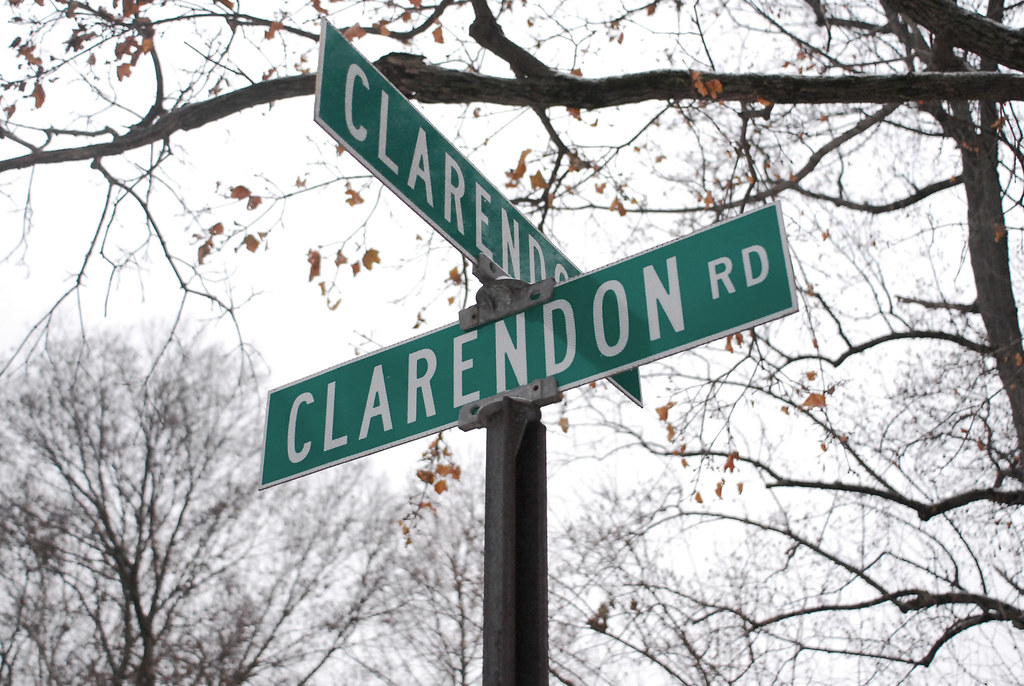
I've often grasped aimlessly at the word to describe the fabric of the anthropological community. I have called it misanthropy before. In the adminstrative circles diversity comes up. I think a more apt word is intersection. Here, where Clarendon meets Clarendon, perspective and exchange and reflection abound. To gain a holistic perspective then, is to live intersection.
15 December 2008
On Scholarship
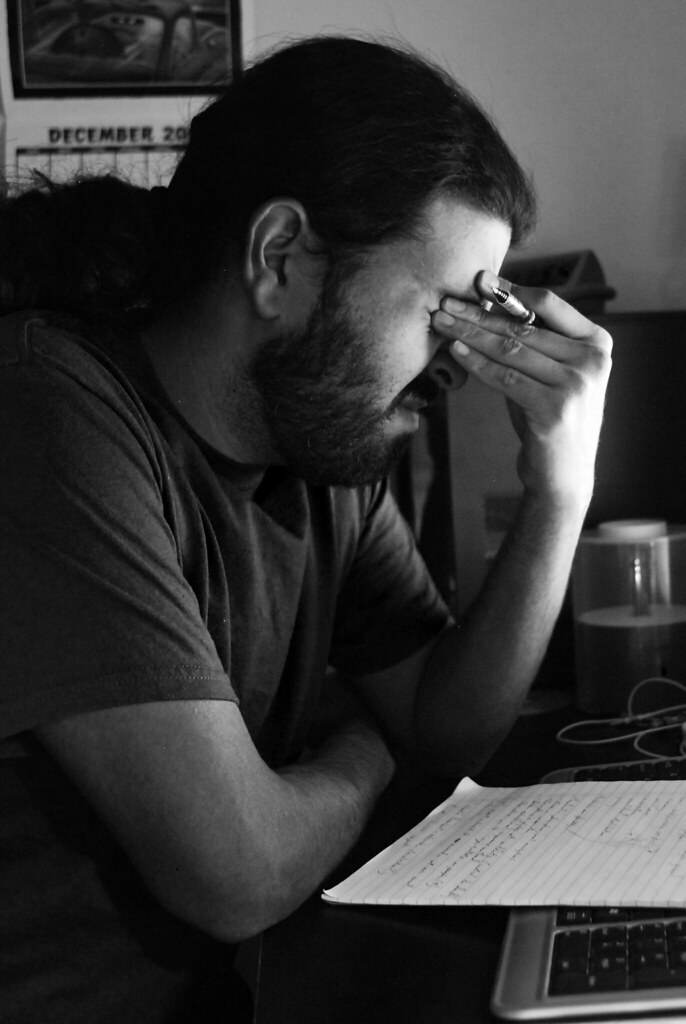
On an unrelated note, I wathced Little Miss Sunshine with my roommate earlier today, before beginging the session represented above. One of the drives of that dark and hilarious film is: do what you love and fuck the rest. Okay, so maybe it wasn't such an unrelated note. Joke's on you.
After finishing my paper today, I realized the burst of joy I got in writing my works cited page. To me there is little more fulfilling than organizing and compiling sources after writing a brilliant conclusion. And for that, its worth it. Fuck the rest.
16 November 2008
Contention and the Sickeningly Cute

Photos are a contentious thing. Though they are often considered as true reality because of the raw light and physical presence needed to get images, a great deal goes into their production. Filters and editing are physical ways of altering reality. Choices of subject and composition are others. Where is the focus, what is in the background (and what does it mean for the background to be that way), is there action, which subject is hilighted more, color or black and white. Photojournalism creates specific types of reality. Often, when I'm approaching "mundane" things like speeches I consider the possible placements of the photo on the page when considering my shots.
The shot above is unedited. Oddly, it is this photo more than others that best represents the "Bulldog Beauty Contest" of Butler's homecoming. There is no bulldog in this photo and, save for the sash, no indication of competition. But it is the human-dog relationship that makes this contest meaningful. To find beauty in bulldogs is something particular to a school that has such a fleshy and stocky creature as its mascot. For some, this event celebrates the bulldog, the connection to Butler. To others it is the animal bond.
I made this photo moments before the man tucked that tiny dog back into his coat and sought warmth from that damp, frigid morning. That moment is far from what the contest "actually" is, yet it nonetheless provokes something that all who have and haven't participated in such an event can relate to.
If not, then at least its a pretty damn cute dog.
13 November 2008
The Maestro
This man, the maestro, has made very clear that I made the right decision.
I've been fortunate to have won a seat in the Butler Symphony Orchestra, even playing principal flute last spring. It was in this orchestra that I was pushed into a new dedication. I was led here by the unyielding dedication of this man, whose devotion to the experiential (as opposed to professional) aspects of performance knows no ends.
He says, ad nauseum, that in the rehearsal room we check everything at the door. Papers and jobs and deadlines fill the halls outside the room. In there, we become organismic as 80 people literally breathing together; our concentration becomes nearly universal as we are entranced by the beats and "gestures" of the work at hand.
In this space, under the charismatic direction and belligerence of the maestro, music is brought into a communal life under the topsy-turvy gaze of liminality.
Visceral
Then again, some photos are just cool.
This is especially true with sports photos. Action, action and more action is the name of the game. Split second captures reveal human bodies in flex and contorted in strange ways. Human faces are caught in moments of pain and exertion that often are comical.
This photo here did not make it into the paper. Indeed, we of the losing team do not want to remember these moments of, well, failure. Nevertheless, as I fumbled with a loaned D700 and 400mm lens, this was one of my favorite captures.
The two scenes are juxtaposed in so many ways that subtly lead to our understanding of what's going on. The quarterback "faces" the left and the team is running right. The team is up, the quarterback down, in every sense of the word. Finally, his back lies bent, his body nearly flaccid as he recovers. No. 93, however, thrusts his arm straight outward as his team scores.
We see, at once, utter loss (if not shame) and pure celebration. I think this photo comes across as both emotional and cool, as it were; visceral in its dramatic juxtaposition.
02 May 2008
Misanthropy, Anti-Intellectualism and the State of Things
Is it ironic to live and breath anthropology, yet abound in misanthropy? Humanity. Ur doin' it wrong! My days, of late, are bipolar swings from hope and camaraderie matched by despair and feeling lost in the deteriorating state of the world. I can't handle the media any longer. From the attitudes towards the church that was raided to the fact that the 2008 campaign is focusing on a man, Wright, who has absolutely nothing to do with anything. Time's 100 came out recently. Is it any surprise that Brad Pit and Angelina Jolie appear on the list alongside the Dali Lama? Is it any wonder that TV and movie celebrities appear on the "Heroes and Pioneers" list and that there is a section devoted to artists and entertainers? Not to say that art and music aren't important things in life, but that we attribute equal levels of influence to Barak Obama, George W. Bush, Lorne Michaels and Bruce Springstien boggles my mind.
Maybe I read too much into these things. But that's what anthropologists do, we treat the media and seemingly insignificant and harmless things as valid artifacts, symbols dependent on hegemonic systems of understanding and value. With the unrelenting presence of mass media and communication it is no surprise that Lorne Michaels wields as much influence if not more than, say, Vladimir Putin. But seeing that these two men operate within (what I would consider) completely separate spheres of reality, I am worried that we form our view of the world with shady boundaries between what we see on TV and what is going on abroad.
Separation of church and state (HA!)? Let's try separation of TV and reality first.
Anthropologists have interesting perspectives, a perspective that seems strangely lost on many (for it is not difficult to obtain). We are no better than anyone else; there are systems of belief and value that I cannot escape which influence how despondent I come off from day to day. However, what I witness from many of my peers all around is saddening.
Anti-intellectualism is very real. This is not an attack on "stupid" people or religious minded folk. Educations vary widely across the nation and I have no problem with religion and faith so long as it is accompanied with as little arrogance as possible. No, this is an attack on actions. Everyday people refuse to open their minds even an inch to explore something new. We are so entrenched in what is American and Moral and Traditional that we are closed to expansion. Now, things that are new (and often confusing) are not seen as opportunities to learn and understand (were they ever?) but are simply seen as threats to our very existence and being. Everyday people refuse to make up their own minds and instead heed the calls of TV anchors, "analysts" and rich celebrities.
I'm having difficulties communicating exactly what I mean; perhaps I have grown weary from my wild run. I'll just say how I came to think of this misanthropy. As I consider my future in archaeology, I must look to graduate school. Much of my looking is dependent on the fact that I want to leave the Midwest. Climate and landscape have driven me to the breaking point. My research into archaeological theory has shown me that archaeology in the US, as with all "American" things, seems to operate in a sort of vacuum. I had an epiphany. I need to get the hell out of this country and work with academics abroad. I am by no means naive and have traveled abroad for brief and extended periods, but leaving the country for grad school brings me to another level.
I have joked about Canada and fleeing there like the hippies of yore, driven out by a draft that never came to be for our generation. But, in my epiphany, Canada became a logical idea. The type of archaeology I want to study is found in this geographic location. This option is very much on the table and appeals to me.
Then I wondered if I really am being driven out. Certainly, my generation shares many things with the flower children of the 60s and 70s. Indeed, I am positive that we are entrenched in the same Cold War ideology. We've got the war, we've got the injustice and we've got the idiots in Washington. We're missing the draft. But, I am realizing now (having found myself in many uncomfortable spots like the Creationist Museum in Kentucky) that I am not welcome in the country.
This world we have created within the United States, one driven by greed and money and religion and self-riteousness has pushed me too far. Here I am, a young man with a great group of friends and a wonderful supportive family (and a hell of a lot of potential?), distrusting humanity. It's not right. Whilst navigating our world as one does nowadays through Facebook and CNN and "the tubes" I am angered and frustrated.
I see hope though, despite my dismal outlooks presented here, deep down inside of me I am an optimist, a humanist that knows there's potential. My hope now is that I can find my higher higher education abroad and flourish in an environment that embraces intellectualism and embraces the opportunities and challenges of the world today.
Will I come back? What will the climate of US philosophy look like in 10 years? Am I abandoning my country in its time of need? I'm not sure. Will I become another statistic of brain drain? I don't know. I probably won't find a way to change the world, I just hope that I will be able to find a place in it.
11 April 2008
Acting Out
Hope and change has been the slogan of this political year. Unfortunately, politics has inspired little hope and has instead planted seeds of despondency that the United States is on a one way path to epic failure. All aboard the fail boat!
The immigration debate has inspired such despondency within me of late. It was highlighted by a small news story that slipped under the radar recently. Absolut Vodka ran an ad campaign in Mexico in which (in an attempt to celebrate Mexican heritage) it ran the slogan “In an Absolut World” over an image of 19th century North American, where all the territory west of the Rocky Mountains was Mexico. Outrage arose, not from within Mexico, but rather from several conservative groups and journalists in the United States that called for a boycott of the brand. Absolut apologized for its campaign and stopped running the ads; A politically correct, profit minded and truly “American” response.
This reaction is representative of the deteriorating status of Mexicans and US/Mexico relations in light of the immigration debate. All politicians are dealing with the influx of illegal immigrants into this country, but the kind of rhetoric and ideas that are being thrown around reveal a dehumanizing of Mexicans.
In this debate Mexicans and Hispanic immigrants coming from the south are referred to as problems and often as “illegals.” Some might argue that terminology is harmless, but I think otherwise. Referring to fellow human beings in such negative ways creates immediate prejudice and devaluing. As a result the identity we project on Hispanic immigrants is one centered on notions of rejection, objectification and immorality. We refer to them, not as people, but rather as amorphous entities that exist in the realm of illegality and encroachment.
The discourse of solution is not a positive one. Illegal immigration (and the millions are human beings associated with it) is referred to as a problem that needs to be rectified. Immigrants are objectified and treated as commodities as we decide their worth in our economy and culture, or as we decide which ones to ship back and how to do so. There is not talk of moving forward, only of creating stasis by cutting off the routes and purging our country of these dirty, illegal and problematic bodies that are corrupting true American values.
Stephen Colbert joked with Mike Huckabee about building a catapult along the border to fire illegals back into Mexico. The idea seems ridiculous, but his satire is not far off. It highlights the dehumanization of Hispanic immigrants. Not only are their identities essentialized to that of “Mexican” but they are considered inherently illegitimate. Whether we agree with it or not, the immigration debate has stolen the status of equality from Hispanic immigrants. We are living in a world where “freedom and justice for all” is a farce and instead, human status is determined by economic worth and genealogy.
To be Freudian for a moment, can we examine the illegal immigration debate, and responses like those to the Absolut ad, as an acting-out of some deep seated problem? I think we can. The crisis we are facing here is not one of population, jobs, culture or globalization. No, what we are facing is an identity crisis of a national sort.
We are facing many problems as a nation, namely our economy and our political reputation. As the European Union and China grow stronger our role as super-power is being contested. We are accused of anti-intellectualism. Culturally we are divided over gay marriage, abortion, religion and wealth. Every day I see hopeless efforts to establish and secure the idea of “America” and a greater number of individuals and ideas that contest such an identity at fundamental levels.
The role of the United States and our future is uncertain and possibly quite bleak. As a result we are acting out and building fences on our borders to keep out those seeking better lives. As we become ever so deeply involved in contentious conflict in the Middle East, we are troubled and take our frustration out on those illegals that indisputably have broken the law and assailed our “American” values.
This debate is not about immigrants, they will continue to come and there’s nothing we can do about it. If we were a healthy nation, we would have confidence that our economics and culture would adjust accordingly. What I see through examples like that of the Absolut campaign, is that these crises we face are more likely unhealthy and counterproductive projections of our own cultural and identity crises.
We are freefalling downward into a pit of cultural crisis and shutdown. We are so insecure with who we are a nation that we are threatened by the Spanish language. Eventually, we will end our descent and hit rock bottom. We will be confronted with tumultuous and violent conflict as we run out things to cover our problems. Shall we focus of catapulting illegals back to Mexico? Shall we continue to obsess ourselves with the lives of celebrities? Shall we fill the voids of our political lives with debates over tiny and insignificant questions and comment? Or, shall we being to look deeper and find those bugs and irks deep within our cultural being and face our problems and the world’s problems head on?
I have not yet completely resigned myself to the bleak outlook I have defined here. I still have confidence that what we need is simple change on our own parts. Instead of breeding dogma, we need to breed understanding. I hope that one day we will be known as the generation of understanding that rose to the great challenges we are facing now and moved forward.
25 February 2008
On Being
But hindsight is only relevant so far as our conception of the past is relevant. Our common idea of the past has become widespread and is assumed logical and "true." One event happens and leads to another and so on and so on bringing us to where we are in the modern day. I need only mention certain cultures with cyclical views of the past to complicate this hegemony. We can find multitudes of human understanding of the past. But nevertheless we, as your every day US citizen, conceive the past as linear and rationalize a lot on this assumption.
But I'd like to step outside the realm of humanity for second. I'll stretch post-modernity to its very limits. If indeed our past and the past of many other cultures are equally valid, then so to are the pasts of non-human creatures. Some might find this ridiculous. Can a dog be truly conscious of a past? I do not know. But if we can assume, for a moment, that human consciousness is one of many consciousnesses then we can take an example from the animal kingdom at large. We cannot get into their heads, true, but ideas of imprinting and adaptation seem to suggest a recognition of past conditions in relation to current ones. Even instinct may be some genetically owned conception or record of the past.
Some animals may have very short memories. What of the past for them? Radically different.
The point I want to make is that the past as we know it is an artifact. This has much to bear on my being. I have memories of my past, but they ways in which I formulate them and the ones I choose as pivotal are informed by who I am today. My memory is less representative of my past and more of my present.
Is there a true me then? Post modernists are often criticized for rejecting all truth, nihilism, oh my! This is not the case. There is a true me, it changes from day to day and reborn in every minute. I am at the whims of the present. I have been oft accused by a good friend and former girlfriend that I am not the way I used to be. That somehow I was veering from my true self. This also is not the case. At this point in my life I dedicated much time to figuring out who I am. I'm fairly confident in it and I can say that how I act is who I am. To create some idea of me may largely prove to be accurate, but when I act differently I am not less myself. I am always myself.
The past exists. But it should not be assumed as true or somehow verifiable. Any recollection of it is an artifact. The past is very real to me, but only as a creation of myself in the present. Tomorrow I will be different and so will my past.
As for the future: I'm still up in the air about that.
31 January 2008
Feeling the Music
I've been a flute player for nearly 12 years now and have enjoyed nearly every minute of it. I am not a music major and have no interest in making music into a profession. I do it as a profound respite into a magical world where bodies sway and emotions flow freely. I am quite fortunate to have won the spot as principal flute here in the Butler Symphony Orchestra and I have taken a lot of recent enjoyment in working more on my playing. I have been reflecting on my brief past in music and it is a pleasing thing.
I have always been a good flute player and I was quite serious in high school, although I ultimately decided not to major. My flute slipped for a few years as I focused on anthropology and other aspects of my life. But I have been working harder of late and have brought myself up to a familiar level. Ultimately, though, I think my success has little or nothing to do with practice time, inherent skill, perfection or even devotion. Instead I owe it all to feeling the music.
Our conductor makes many detours from the music during rehearsal time, but a common theme he speaks to is feeling in music. He asks us to move with emotional parts and inject an energy into our playing. The reality is that we can only physically control the speed and amount of air going into our instruments. Regardless, we can alter the sound and overall feeling of a piece of music by feeling the music. Without changing tempo or volume we can add great energy to a passage. Without slowing or stretching, or even adding vibrato we can make a theme tear at the heartstrings of the audience. This ability is what separates good and great musicians.
I decided not to go into flute performance because I knew that that future would entail a great deal of regimenting of and professionalizing music, breaking down music into often times frivolous categories. I thought this would kill music for me. And, to be honest, a lot of musical terminology is lost on me. Nonetheless I can be successful because I connect with symphonies passages and sounds. This is the beauty of music, it is something that comes from within, something that also embeds itself deep in your mind making certain passages unforgettable. It is something that can change feeling with mere thought and mind-driven expression. It is something that creates goose-bumps on my skin at truly wondrous moments.
We are playing Schumann's 1st Symphony in B Flat and the final movement is a exciting allegretto that wraps this symphony up in that magical way that can only be achieved by these grandiose pieces of music. We often rehearse this movement last and I am often stuck with parts of it in my head for the rest of the day. I have not been able to articulate what I wanted to as well as I normally do, but this perhaps does it best. The tempo for that last movement is roughly equivalent to the tempo of my walking stride. For this reason, walking away from rehearsal I often feel the music in each step, my body rising and falling and my mind swirling with chords and attacks and beautiful themes. Its enough to bring a grin to my face for no obvious reason. I am truly feeling the music, it is something that pleases me, something that works its way into my being, something that never leaves me.
10 December 2007
"Saved" By Mother Nature
Of late my encounters with Christianity have been many. From the encounter with a friend about an early blog, to an unsuccessful conversion attempt to, to a recent viewing of "Jesus Camp" and culminating this evening with news about killings in a missionary training facility and televangelists on late-night TV. Maybe someone is trying to send me a message?
Perhaps without taste I asked a different friend (whom I knew to detest missionary work) if she had been in Colorado recently. Such is the reality of humor many times. Still it provoked a brief conversation where she asked if anti-religious sentiments might be the motive. While I'm sure that the perpetrators of this crime in Colorado will be accused as hating god and religion and once again sully the name of atheists, the irony of the situation is that those who are "against" religion are not the ones that have tendency towards violence. Some might call us peace-nicks. Indeed, still another friend (for isn't through others and the world around us that we truly perceive and realize ourselves?) jokes at my being walked over or avoiding conflict due to my pacifist ideologies. Why is it that without god the world suddenly becomes a much more reasonable, happy and peaceful place? It must be that pesky devil seducing my mind with such temptations.
Religions are interesting in that they tend to accuse sects within their cosmologies more of being, say, not Christian, than they do competing religions. This comes to light in Christianity the most, although I know Muslims are won't to criticize Suni or Shia Islam. The evangelical movement in the United States is an interesting case, then, for they say that they are saved and that other forms of Christianity, say Catholicism, got it wrong. The reverse is true when "true" Christians condemn the often militaristic message and practices of extreme evangelicals. Still other Christians might speak out against all church organization period, claiming that finding Jesus can only happen on an individual message (yet they still try and tell others to find Jesus in the same way). With all this bickering within the Christian faith, what are we to make? It is not necessary for me to add other religions like Islam, Buddhism or Hinduism into the mix to further complicate the message of true salvation that all sects of Christianity offer for one or another.
I am glad, then, to have been "saved" by Mother Earth, Darwin, Marx, Vonnegut, Einstein (and the like); indeed saved by my own logic and critical nature. For atheists have an opportunity to experience such religious bickering from a different perspective. What I see is that many many different, often irreconcilable, cosmologies are stubbornly preaching that it is their way and their alone that will offer the individual salvation and make one's life complete. Individuals within each cosmology, then, feel the right and NEED to say that others are incorrect and (drawing of my own experience) imply that their lives are forfeit (pointless?) and that they are too arrogant to accept the "truth." Who has the right to make such statements? Not I, not the Christian faith, not anyone. Truth is not an absolute concept, it is individual, fluid and dynamic. Nothing incites more disrespect within me than when someone has the nerve to tell me that my way is wrong, their's is right and that I need to see that or accept my fate as a hopeless soul. My ideology is not for other's to judge just as other's are not mine to judge. Clearly I have opinions of Christianity and am not afraid to point out discontinuities, but have I said explicitly in this blog that Christianity is wrong? That Christians are denying the Secular Humanist truth? That they are too proud to humble themselves to reality? No, because no one, be they a deity incarnate or not, has the place, experience or cognitive ability to say that one way is right and the other wrong.
Is it an atheist who likely killed those missionaries in Colorado? Is it someone like me, who by seeing beyond god, allows (indeed, humbles) his mind to the fact that it is not all-knowing? Was it someone who respects not only all human life, but all forms of human thinking (without feeling high and mighty enough to PITY the helpless ignoramus)? No. Likely this perpetrator has put faith in some sort of concrete ideology that offers no questioning, only comfort in not asking questions, a false certainty. Is this perpetrator likely to be Christian? I don't believe so. Muslim? Even less likely than Christian. This was probably purely random. Perhaps for that reason it has little connect to this rant.
I am an atheist. I have concluded, through what I conceive to be logical thought, that the physical realm that we inhabit is the only one we can fully experience during our cognitive biological life. When we die, our organic remains are recycled by nature and we travel into the same nothingness that we spawned from. There is an equilibrium of energy in the universe and always has been. Seeing that this life is all that we have, we might as well make the most of it, without shrugging off the problems and turmoils as tools of the devil and illusory. I'm not perfect. I'm not saved, I'm not loved. I'm responsible, to myself and to humanity. All who wish to prove me wrong and tell me that I am blind to the "real" truth. To all those people: Kiss My Heretical Demonic Ass!
29 November 2007
Genocide, National Responsibility and Revisionists.
Another topic that invoke similar feelings, which I will soon explain, was about the proposed Smithsonian exhibit on WWII and the atomic bombing of Japan that featured the Enola Gaye. This exhibit was eventually abandoned because of outcries from all angles of the spectrum. Veterans, peace-niks and the Japanese wanted to see a critical eye turned towards atomic weapons in this exhibit. Just as many veterans and US politicians however didn't want to see such an iconic artifact of US history belittled and shown as a bringer of evil. They accused the museum of being "revisionists," liberal scholars who wish to sully the good name of "America" (Need I mention again the foundation of the nation?). With the controversy flying left and right around the exhibit and a great fear of the Smithsonian losing federal money, the exhibit was abandoned.
Here are two examples of how the United States has managed to weasel its way out of taking responsibility for questionable periods in its history. National museums, notably in Germany (which hasn't hidden from the Holocaust legacy), create museums and exhibits devoted to things like "genocide." Meanwhile the US, which walks around with its head held high singing its own praises about being the protector of liberty, freedom an democracy, seems to live in a state of blissful ignorance of its own past. This nation has enjoyed so much power and influence (and lack of regulation) that it hasn't had to own up to its past. If either of the topics discussed above had made it into museums in their rawest forms, the controversy would be incredible but it would force the nation to deal with these topics. We may not like what happened in the past. We may want to respect that many young people have loved this nation so much that they fight for it, but we cannot forget that in fighting not only our US lives lost, but so are millions of others, many hundreds of thousands in mere seconds even. War is an interesting occurrence that at once calls for celebration and criticism. And it is not right to give one preference over the other for fear of getting "America" down. We don't have to visit the museums or feel good about them being there, but they should exist as reminders so that we no longer walk unaware and jaded in a world where we are so quick to judge other cultures and nations of their deeds.
There are many parallels between acts of violence throughout the history. The "American Genocide," September 11th, The Holocaust, The Crusades, Pearl Harbor, Japanese internment, the dropping of the Atomic Bomb, they're all on the same level as far as I'm concerned. Horrendous acts of violence that, despite their contested neccessity, unprovoked-ness, or senselessness, resulted in massive loss of life. Just note, for a second, that the Holocaust, The Crusades, Pearl Harbor and September 11th have all resulted in the perpetrator/s to be "dealt with" or at least to take responsibility for and commit such acts to national memory. Shouldn't we?
18 November 2007
Fluidity, Humanity and Hope.
However, the humanities will be the most important aspect of our futures. In 10-20 years I see myself working as an anthropologist, teaching at a university, making anthropology and social science more accessible to all people, to begin to incorporate its most helpful insights into the minds of all people. I will provide opportunities to think outside the box, cross disciplinary lines and incorporate critical thinking and reflexivity into all aspects of life.
I want to show people that reliance on science as an alternate to religion will only result in bad things. Technology cannot save us, it cannot incorporate itself into the most fundamental levels of humanity and open our eyes. Science, technology, the internet; it creates an illusion of people being closer to each other with connections made with the touch of a button. In reality, it is bringing us father apart. We've created a world where it is possible to live one's life completely on the internet, leaving the house is not neccessary. Indeed, networks like second life allow an individual to create another state of existence, one separate from true human contact. Science encourages us to forget about interactions and problems, and to simply wait until the new ideas comes along that will solve whatever problem there is. Desertification you say? Science will come up with something to solve that. Drying up of oil? Science will create alternate fuel sources, until then we'll just do like always. Developments in technology and scientific understandings of the earth will be important, but they should be the sole idea considered in the "future."
I want to make people critical of medicine, consider the impacts of the biomedical tradition. Consider different forms of healing, forms that often have comparable success rates as biomedicine. Consider how the idea of illness and health varies across the world. The biggest worry I have about relying on medicine is that we will attempt to cure all illness and disease, perhaps with hopes of conquering death. People die for a reason, not to teach a lesson or set an example, not as punishment. Natural evolutionary processes require death. I can't help but wonder if by finding cures to disease after disease we create a population that is prone to illness, where sickly genes can defy the laws of natural selection and create a humanity that must live in hypoallergenic bubbles with weekly immunizations. It is ironic that the more germ-conscious and afraid of this disease and that one, the more we limit exposure to natural elements (no matter how discomforting they might be) that we will breed super-bugs that are resistant to the many ways we attempt to kill them. What will the population of the earth look like in 100 years if we cure cancer and heart disease, problems that have been unable to hamper massive population expansion? What far reaches of the earth will we marginalize people to to make room for people living to be 120, 150?, years old?
I want people to question the position of the US in the future. Capitalism will very soon be on its way out as we see how sick and problematic Adam Smith's capitalism really is. In the future a degree in business will be the equivalent to holding on to a dying tradition.
I want people to think critically, as I do here on this blog. I want people to take a step back and evaluate both the extremely good and the extremely bad to make as well rounded as an understanding as possible. This hope lies in strong support of the humanities, the social sciences, English, international studies, the liberal and fine arts. I want people to think of the world as a fluid place where people drift hour by hour from one role to another, to one lifestyle to another, not as a world where we are bound by cultures and vocations. Specialization will inevitably occur, but this does not mean shutting oneself out from interdisciplinary influences. Fluidity, humanity and hope will be the mantra to consider. With a grounding the humanities we can incorporate many ideas and disciplines, while accepting nothing as doctrine, nothing as universal truth. We will be able to weed out the goods and bads that are hidden within all ideas and ways of acting. The Humanities is where our future lies, it is where my future lies and, quite frankly, I think it is our only hope.
12 November 2007
"...Living in a State Beyond Absurdity"
Here’s where my mind fits in. I’m human. Everyone is human. Perhaps of all the universals, and theories, and ideas there is one truth; everyone is human. I must clarify, of course, this word, “everyone,” refers to people, on this planet of earth. Those living all over the surface. Those bipedal hairless, fragile, big-brained, mammals that can recognize the shapes in this writing as meaningful words or could understand these words were they spoken to them. If one could read this sentence, or if one has the cognitive capability of understanding the meaning that I wish to convey, that we are all humans, through whatever means necessary, then that individual is a “person.” I realize there are some that have not the cognitive capability to understand this, but they need not be excluded, for we can define humanity down to a genetic level. Perhaps its basic, perhaps it goes without saying, perhaps it is one of the largest oversights that human kind has made in the last several centuries, but nonetheless, the phrase, “We are all humans,” if mutually intelligible, is the one certain worldly truth. It is only by giving this simple sentence a moment of thought and consideration and then by acting on this sentence as a manifesto and call for action that this world will every become right.
In short, we are all humans, but the majority of humans don’t understand that. Religion, capitalism, war, technology; it’s all really meaningless. We’re all humans.
I’m full of contradictions. Here I sit, at a computer, in a high-priced university apartment, having just proclaimed recently, that while I love to study people I don’t really care about people, yet I assert that the future of humanity lies in realizing that we’re all humans and that nothing else beyond that really matters. I think, though, I am willing to make the changes necessary to realize this future. Perhaps I realize an inevitability and therefore feel little need to actively make changes in my lifestyle as of yet. There will come a time, though, I believe, where all these changes will be forced upon all humans by necessity. Many will suffer. Many are already suffering. I will suffer. It will be hard and probably violent. But the harsh truth is that the only form of living that will work will be borne out of the phrase that we are all humans.
Compared to the few, my most basic living conditions and experiences have been absurdly primitive. Compared to the many, my most basic living experiences have been absurdly luxurious and shameful. I am not afraid to realize that. But here I sit living in a state beyond absurdity.
I’ve given a lot of thought to the fact that we are all humans. I realize it. I see that we need to change as people. No amount of aid or love or money will make anything any better. The capitalist system will fail. The United States will fall from its position as a world power. Marx’s inevitable, unforced, and uninitiated revolution (or perhaps realization) will occur. Equality will be reached in its most primal sense. Only in understanding that everyone is a human can equality fully be realized. Legislation in human rights and universal rights will become senseless and foolish. Why dictate an inherent right, why attempt to give it meaning, a simple self-realization will suffice. Why pray to a God, why attempt to delude one’s self into believing that there is something beyond the fact that we are all human. Why convince one’s self and other individuals that the world works one way or another. Why attempt to make one’s self better than any other?
09 November 2007
Beauty in Truths
To rephrase, how do you explain different and opposing realities or truths? We're not so different he and I, we're both not fans of religion, both heed a call for basic good, both liberals (however one wishes to construe such an identity), both having found our place in the world. How then does he reconcile that I don't believe in a god? (Without saying that I am wrong.) Essentially, we both came to the same place, a place where we reflected on our life and the world and what we were taught. We then each chose two completely separate truths. Here's where I am: My truth accepts all truths, I see millions upon millions of different truths, each equally as valid as the next. Who am I to say one's truth is false, or that it really fits into other truths? This is not say that there are no truths. My truth recognizes the fact that there is no one single answer, each person's answer to life is unique to them, even if it falls under the realm of Christianity, Islam, Humanism, Atheism. I know that my answer isn't everyone's answer, but, as everyone does, I think that my answer is the most logical.
So, to make my point in a different way I ask myself the same question. How do I explain theism? Belief in God is an individual's reckoning of the world they live in, the things they've been taught and an inward search. They find that there is a higher power that has put us here, that we have fallen out with it, but that we are striving to reach again in an eternity. How do I explain atheism? Atheism is an individuals reckoning of the world they live in, the things they've been taught and inward searching. They find that science explains the world in predictable ways and that the world can only be reasonably understood by what can be observed. How do I explain Humanism? Humanism is an individual's reckoning of the world they live in, the things they've been taught and inward reflection. They find that, despite all the seemingly endless and irreconcilable contradictions, that all people on this planet share the human condition; respect of the human condition as it exists in the material world frames how they act. By reconciling different beliefs and ideas in their own terms, instead of my own, I create a world view that accepts multiple real truths all creations of individuals in unique time and space. This doesn't make my ideas or anyone else's more or less valid, but simply recognizes them as they are. (I cannot possibly get inside my friend's head, nor he in mine, and because of this neither of us can alter the other's truth.)
I don't think that Jesus or Vonnegut are the ultimate truths, that one or the other is better to find solace in, both only share their message on their own terms. Jesus believed in God the Father (a reflection of his own personal experience as being the son of God), Vonnegut was cynical of religion and the wars that he perceived to go along with it (a reflection of his horrifying experience in World War II). I identify more with Vonnegut then because we share the same cynicism. However, I reckon a truth on my own terms, that while influenced by Vonnegut, certainly does not take an identical form.
I think that recognizing other truths and beliefs is not so much a specific path that runs in opposition to other paths. It's not an absolute ideology, but rather more of a courtesy within or complement to an existing ideology. I think that by doing this we can find beauty in our own truths as well as others'. I hope that he, my friend, need not be frustrated with Vonnegut, and that this frustration, no matter how profound, would keep him from reading his words. Indeed, some things are easy to learn, some things are fun, others force us to continually be critical and thoughtful and are terribly frustrating and difficult; even exhausting. Nevertheless we should never deny ourselves knowledge and experience, for this is the only way we can know better who we are.